Vietnam

Thursday, November 15, 2018

Jaipur, The Pink City

Jaipur is the capital of  Rajasthan's a is the third city in the Golden Triangle. In 1876, the Prince of Wales and Queen Victoria visited India on a tour. Since pink denotes the colour of hospitality, Maharajah Ram Singh of Jaipur painted the whole city pink to welcome the guests.  Within the walled city, they still maintain the traditional pink colour.

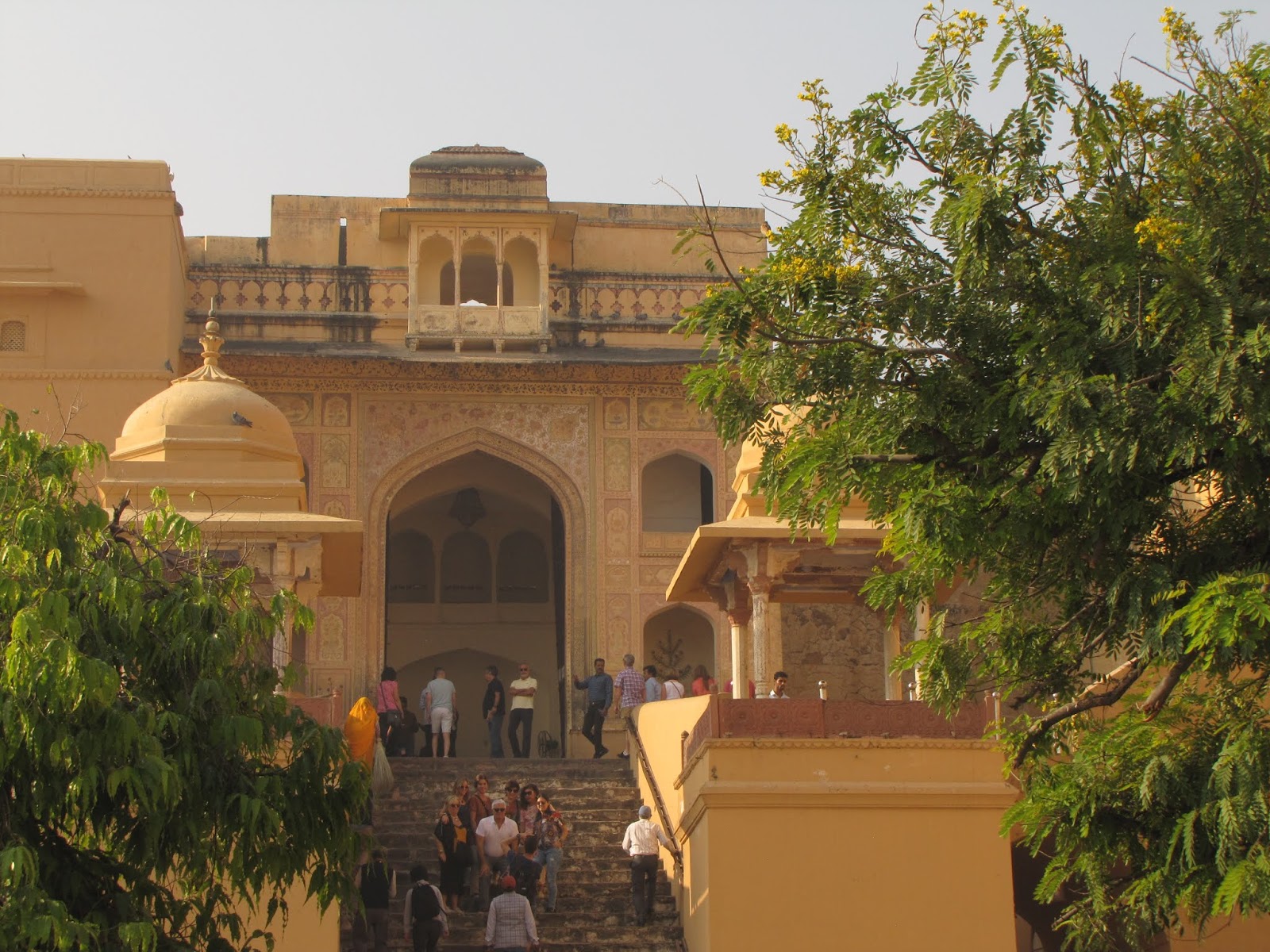
Amber Fort
The Amber Fort is located at the top of a hill we ascended to the top in Jeep. They do still us domestic elephants abut many companies discourage this due to the treatment of the elephants. The Amber Fort has a stunning interior of decorated with ivory, mirror and class between the painted walls.


View of the Garden from Amber Fort


Keeping the Fort Clean


Returning to Jaipur to see the Hawa Mahal Palace - The Palace of the Winds. The palace is constructed of red and pink sandstone. The structure was built in 1799 and extends to the women's chambers. There are 953 windows covering the lace-like facade that allowed the ladies of the royal court to watch the drama of the streets unobserved behind the delicate latticework.


Hawa Mahal

The city is crowded and the traffic in the old town area is gridlocked with a variety of different forms of transportation. They are working on their underground transit and this area has reduced access.

Street Traffic

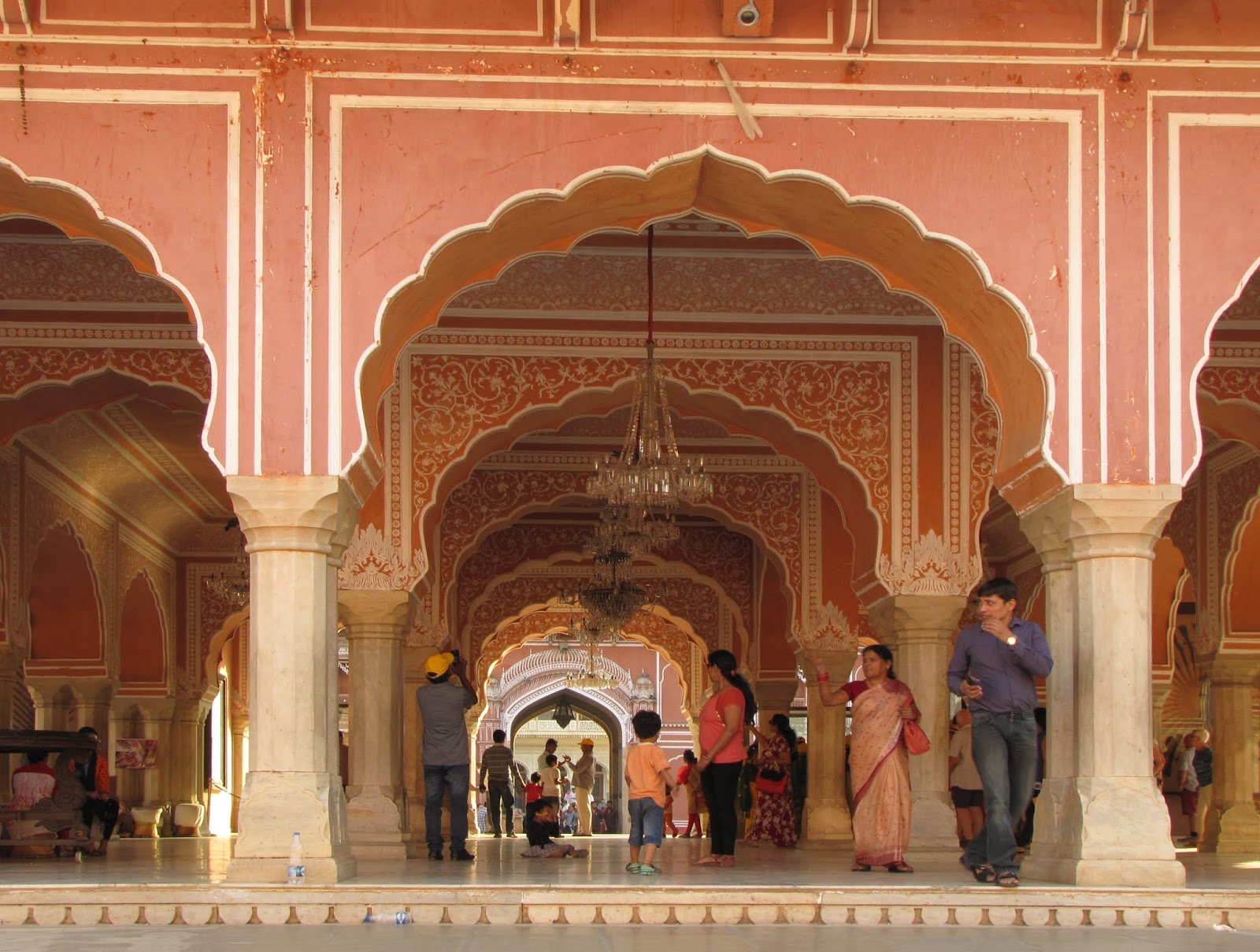
City Palace

City Palace during the day

We had the opportunity to have a wonderful dinner our last night at the City Palace. The building are a glow with lights and very few people are present so the who experience was very magical compared to the day time.

City Palace at Night


Snake Charmers perform for the tourists


Wednesday, November 14, 2018

Golden Triangle - Agra

Agra is south of Delhi and is one of the three cities considered the Golden Triangle in India. The Golden Triangle was named because the three cities the tourists frequently visit creates a triangle shape.

Agra Fort
Beautiful Red Sandstone
The Red Fort was the residence of the emperors of the Mughal Dynasty until 1638 when the capital was shifted from Agra to Delhi. The Agra fort is a UNESCO World Heritage site. The Red Fort is located less than three Kilometers from the Taj Mahal.

We had the opportunity to visit the Royal Pavilions and gardens.


Taj Mahal in the distance from the Royal Pavilion


Cricket Players at Sunset

After our visit to the Royal Pavilion, we visited a rural village learning about their way of life. People were playing cricket in the field and the village children followed us through the town.


Local Children


We visited several houses and saw what the women used to cook meals. In this village, they were starting to outfit houses with indoor bathrooms.


Roof Tops overlooking village dwellings

View of the Taj Mahal in the distance from the roof.

Taj Mahal in the distance at sunset.


After visiting Agra we took a train to Ranthanbore to see the Bengal Tiger in the wild. We had first class tickets on the train which meant that we had a seat assigned in one of the cars. You have to find the correct location on the platform for the car you are assigned your first-class ticket. Even if you have assigned seating you might find that your seat is already occupied and there is no conductor on the train to help you get your seat.


Waiting for the train
Locals board the train from both sides of the cars to ensure that they get onto the train. Seats are not reserved and you have a very short time to actually get on the train while it is stopped. No one was on top of the train as it went by because it is an electric train with overhead wires. The train was definitely full as young men were hanging out of the doors.


Tuesday, November 13, 2018

Ranthambore National Park

The State of Rajasthan is located in northwestern India and contains Ranthambore National Park and Jaipur. The state is mainly desert and borders Pakistan. There are three Tiger Reserves within Rajasthan. We were lucky to see a Tiger as some of the groups never saw a tiger during their visit.

Transportation in the park

Ranthambore is the former hunting grounds of the Maharajahs of Jaipur. Here we had the opportunity to search for Tigers during three separate safaris.


As we entered the park through the gate we were greeted by the monkeys and birds.


There were lots of animals throughout the park but the elusive Bengal Tiger was nowhere to be found on our first safari.

Stag Deer

Spotted Deer

The next safari we saw more birds and animals and just as we were leaving this section of the park we saw the Tiger sitting in the water. The Tiger was cooling off before going up to her dead animal in the forest. As we drove along the road we could smell the remains of her kill that was probably a couple of days old. Tigers will eat off there kill for about three days eating up to 45 lbs at a time.

Bengal Tiger
This picture was taken by Katherine who was on our tour. 

Monday, November 12, 2018

Taj Mahal - Agara

Entrance Gate to the Taj Mahal


Located in Uttar Pradesh State is the Taj Mahal. The Taj Mahal is an ivory-white marble mausoleum on the south bank of the Yamuna river in the city of Agra. It was commissioned in 1632 by Mughal emperor, Shah Jahan, to house the tomb of his favorite wife Mumtaz Mahal.

The mausoleum is located in Agra and took until 1648 to complete. The Emperor died before it was completed. The building is the jewel of Muslin art in India and a UNESCO world heritage site. Thousands of people visit the daily.

The interior of the Taj Mahal contains tow coffins and is not very elaborate inside.  When visiting you pass around a marble fenced in area that contains the coffins. There is no elaborate decoration on the interior. 

The exterior of the building has been carved and shows exquisite craftsmanship.


Morning light after sunrise.


Sunday, November 11, 2018

Golden Triangle New Delhi

The golden triangle refers to New Delhi, Agra and Jaipur which forms a triangle when travelling between the three cities. These three cities are the key tourist destinations in Northern India.


Our first stop was New Delhi. Delhi is the second largest city in India and is the capital of the country. The city has two distinct areas Delhi is the old town and New Delhi has grown up around the oldest part of the city. Delhi is located in the state of Delhi.


Walking around the Indian Gate and the Parliament buildings we felt very safe. The India Gate and the tomb of the unknown soldier are very similar to the Arch de Triumph in Paris.

Street Merchants

Tomb of the unknown soldier


We visited the National Museum to learn a bit about the history of India before we started our tour.

National Museum


The Delhi Zoo gave us an opportunity to see a variety of mammals that we were not familiar with would see in the national parks.


Our last stop before our tour was a visit to the Lotus Temple. This is a Baha'i House of worship completed in 1986. The Baha'i Faith is a monotheistic religion which emphasized the spiritual unity of all humankind. The day we visited the temple it was packed with people.

Lotus Temple
We joined our tour group for the welcome dinner which was a barbecue dinner and dance theater.


The first stop the next day on the tour was a cycle rickshaw ride through the streets of Chandni Chowk market in Old Delhi. This was very chaotic as the streets are narrow and two different rickshaw groups would pass in the narrow alleys.


A quick stop at Gandhi memorial in Raj Ghat and then off to Tomb of Emperor Humayun.


Gandhi Memorial
Tomb of Emperor Humayun


The last stop in Delhi was Qutub Minar, a UNESCO World Heritage Site at sunset. We waited a long time for our tickets to be purchases as it was Diwali Festival time and there were a lot of visitors in Delhi.

Arrived just at sunset


After our quick tour of Delhi the next day we drove to Agra. Agra is the second city in the Golden Triangle tour with Jaipur in Rajasthan the final stop.